

Online nutrition consultation
How Online Dietitian Sessions Work
This page walks through the full path: what the registration form asks, what happens in the intake questionnaire, how the session itself runs, and what you receive afterward.
Three minutes now, no surprises later
Read this once and you will know exactly what is asked of you at every point: the form, the fourteen-question intake, the call itself, and the written plan that follows. Nothing is collected twice.
-
1
Registration form
Name, WhatsApp number, city, best time to reach you, and a rough note about how you currently eat.
about 3 min
-
2
Intake questionnaire
Fourteen questions about meals, water, snacking, who cooks at home, allergies, and what your food budget actually allows.
about 10 min
-
3
Matching you to a dietitian
The coordinator pairs you by questionnaire, language preference, and the shape of your week. You know the name before the call.
within 1 working day
-
4
The session itself
By video call or phone, 45 to 60 minutes for a first consultation. Mostly conversation about the patterns that matter.
45–60 min
-
5
Your written plan
A short menu structure, a shopping list by market section, portions in household measures, and swaps for the packaged foods you buy most.
within 2 working days
Step one: the registration form
The form takes about three minutes. It collects your name, WhatsApp number, city, and the best time to reach you. One field asks you to describe your current eating routine in a sentence or two; keep it rough.
Something like "rice three times a day, lunch from the warung, late-night snacks" is enough for the coordinator to route you. You also choose a preferred session window: weekday morning, weekday afternoon, or evening and weekend slots. Submit the form and a coordinator responds within one working day, usually on WhatsApp.
Start your registration
Keep the first note rough. It is a routing hint, not a test.
Step two: the intake questionnaire
Once your slot is confirmed you receive a questionnaire with fourteen questions. It covers your meals from waking to sleeping, water intake, snacking habits, who cooks, food allergies, and any eating pattern you follow for cultural or personal reasons. Budget questions are included, because a plan built on salmon and almonds is useless in most Indonesian kitchens.
What the fourteen questions actually cover
Every meal from waking to sleeping, water across the day, when snacking happens and what it usually is, who cooks at home and whether they eat separately, food allergies, and any pattern you keep for cultural or personal reasons. Budget questions are part of the intake, not an afterthought — the plan has to fit the market you actually shop at.

Write the honest version
Take ten minutes and answer plainly. Dietitians say the most common problem with intake forms is tidied-up answers. If you eat instant noodles at eleven at night, write that down.
What you need to know
Have your regular weekly spend at the market roughly in mind, along with the names of any foods your household refuses. The questionnaire is the only place we ask these things, and it feeds both the matching and the plan.
Step three: matching you with a dietitian
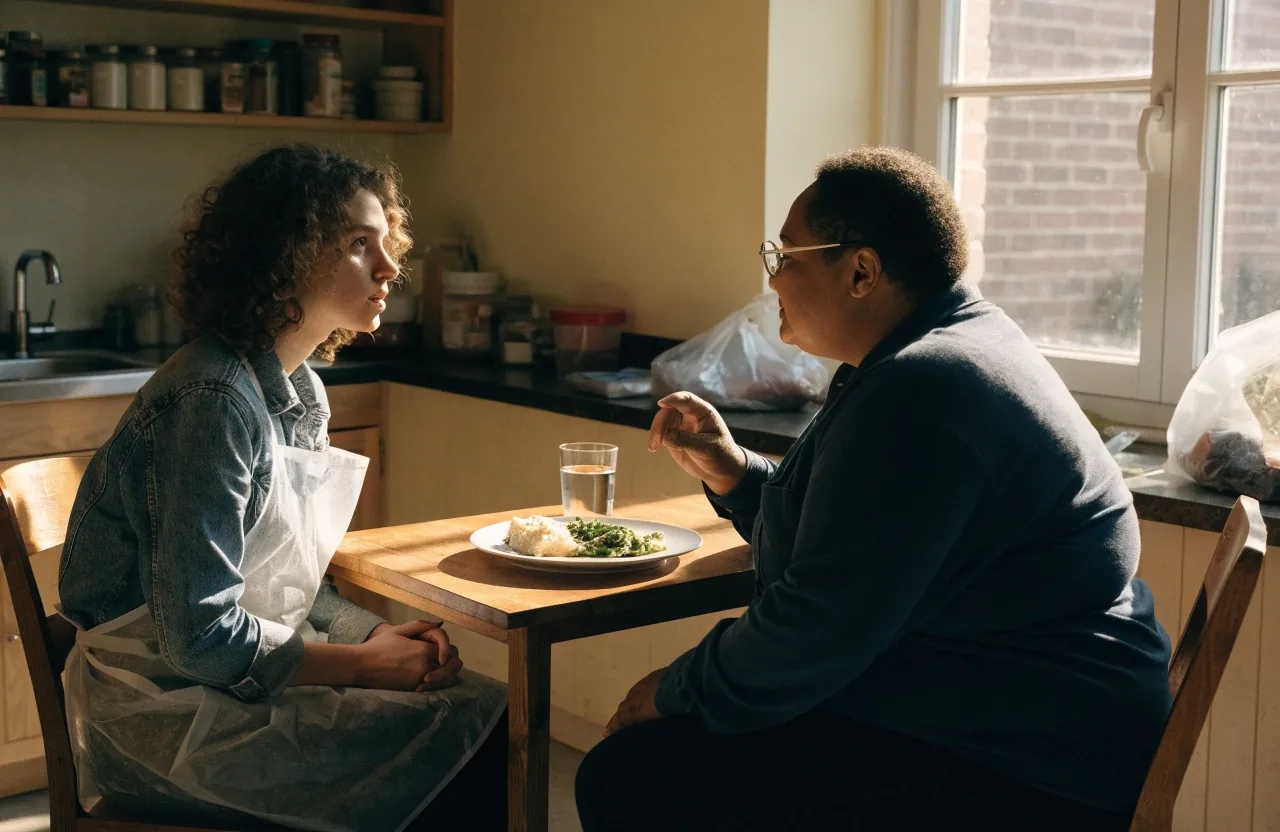
The coordinator matches you to a dietitian based on your questionnaire, your language preference, and practical fit. A parent planning meals for three generations gets someone experienced with family households. A shift worker gets a dietitian who has written plans around irregular hours.
If you have a specific reason for your registration, such as preparing for Ramadan or building a pregnancy eating plan, mention it in the form and it goes into the matching. You will know your dietitian's name before the session.
- Family households
- Matched with a dietitian who plans for three generations at one table.
- Irregular hours
- Matched with someone who has written plans around shift work and late shifts.
- Language
- Sessions run in the language you are most comfortable talking about food in.
- Named before the call
- You receive your dietitian's name in the confirmation message, not on the call.
Step four: the session itself
Sessions run 45 to 60 minutes for a first consultation, by video call or phone. The dietitian has read your intake and starts with the patterns worth discussing, not with introductions. Expect questions that probe details: what time you actually eat dinner, how often you order out, what vegetables your family refuses.
From there you work through priorities together. Most of the session is conversation; a good dietitian listens more than a bad one talks. If the call is not working — bad connection, noisy room, awkward format — say so mid-session and the dietitian will adjust.
Bring to the call
- Your usual week in outline
- The foods your household refuses
- Rough notes on where meals come from
Leave aside
- A perfectly polished version of your week
- Assumptions about what "good eating" means
- Silence when the plan does not fit

Video or phone. Talk over a meal already on the table.
Step five: your written plan
Within two working days after the session, your dietitian sends a written plan. It is written for your household, not for a textbook, and it is deliberately short. If it is the kind of document that needs forty minutes to read, it will not get used. Ask for adjustments if something in it does not fit your kitchen.
See meal planning and menu ideasWhat a typical plan contains
-
A weekly menu structure
Days of the week laid out against the meals your household actually sits down to, not an abstract template.
-
A shopping list by market section
Grouped the way you walk a market or a supermarket aisle, so the list is a route rather than a scroll.
-
Portions in household measures
Written in the units your kitchen already uses, so nobody has to convert anything before serving.
-
Swaps for the packaged foods you buy most
A short list, not a catalogue. Only the products that appear in your intake answers get swapped.

Between sessions
You can message the coordinator for practical questions like rescheduling or getting a copy of your plan. Nutrition questions between sessions go to your dietitian through the channel agreed in your first call. There is no expectation of daily check-ins.
Most people return for a follow-up after three to four weeks, once they have run the plan through a full month of real life — including the weeks that go badly.
Follow-up sessions and how they differ
Follow-ups run 30 to 45 minutes and skip the full intake. The dietitian reviews what changed, what did not, and why. Plans get adjusted for travel, fasting months, school holidays, and the season of food prices.
This is also when you tackle harder items: reducing ultra-processed foods, adding fiber, or working fermented foods like tempeh into more meals. People who book follow-ups tend to report that the second and third sessions were where the plan became theirs.
-
First return
Three to four weeks later
One full month of real life on the plan, so the review is about patterns rather than first impressions.
-
The hard items
Ultra-processed foods and fiber
Follow-ups are where the gentler chapters get replaced by the changes that take a household a few months, not a weekend.
-
Seasonal adjustment
Fasting, travel, school holidays
Plans get reshaped for the months that break routines, so nothing has to be abandoned and restarted from scratch.
What you can reasonably expect
Expect a specific plan and honest conversation about what is realistic. Do not expect a schedule of promised results, a supplement recommendation, or a one-session fix for years of habit.
Nutrition change is gradual, and the dietitian's job is to make the gradual version easier to follow than the dramatic version. If you attend sessions, fill your intake honestly, and communicate when the plan is not working, you are doing the part that is yours. The rest we handle.
A few practical notes
- This service is nutrition guidance
- Sessions cover eating habits, meal structure, and general nutrition information. Advice is not a substitute for care from a qualified health professional where one is appropriate to your situation.
- No supplements are sold here
- No product is recommended to buy as part of a session, and the plan is written around food you already eat.
- We share what we write, and only that
- Your intake answers and plan are shared between you, your coordinator, and your dietitian. The rest of the team does not see them.
Questions we hear most before a first session
Short, plain answers to the things that come up before people register. If something is left out, the coordination team answers messages on WhatsApp.
Can I book before I know what I want to change?
Yes. Many people register because their eating has drifted rather than because of one specific goal. The intake questionnaire and the first call are the point where you work out what to focus on, together with the dietitian.
What if my family eats differently from me?
Say so in the intake. The plan can be written around one kitchen serving two different plates: rice and greens shared, protein and portions adjusted per person. If who cooks is a different person from who registers, name that in the questionnaire.
How do I reschedule or move my session?
Message the coordinator on WhatsApp. Rescheduling, session windows, and getting a fresh copy of your plan all go through them; nutrition questions go to your dietitian through the channel agreed in your first call. Both paths are described at the top of this page.
Can I read more about the everyday side of this first?
Yes, and it is a good idea if you are still deciding. The everyday nutrition guide covers balanced eating habits at home without a plan, and the meal planning page shows what a weekly menu structure looks like in practice.
Start with the three-minute form.
A coordinator responds within one working day, usually on WhatsApp, and answers anything this page did not cover. Our team is reachable Monday to Friday, 9:00 AM to 6:00 PM, at +62 21 520 1234 or [email protected].